SaaS Subscription Consolidation and What Enterprise Trends Mean for Consumers
Enterprise tactics for quietly raising prices are now hitting household subscriptions too.
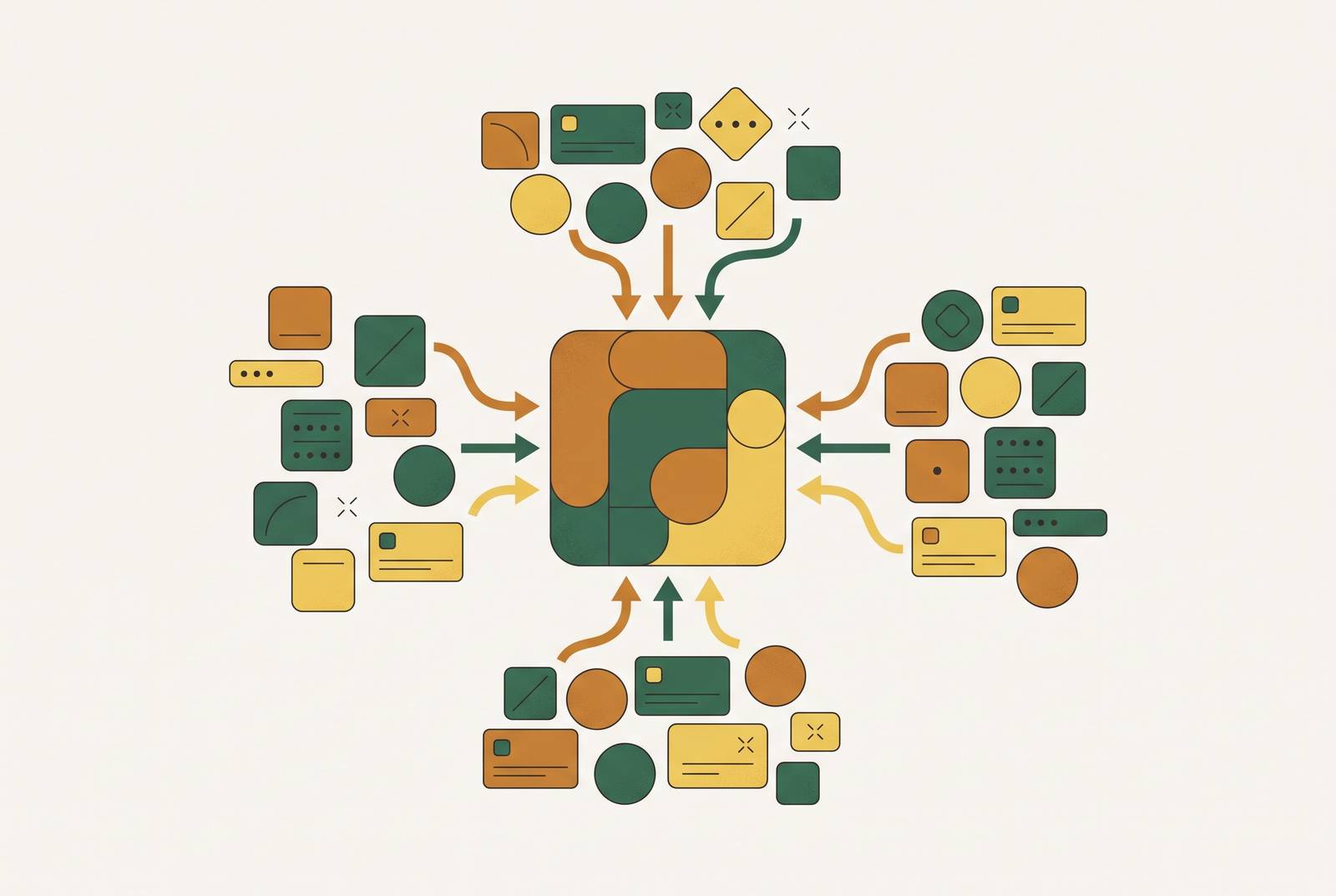
A finance team discovers it's paying for three different project management platforms, two reporting dashboards, and a form builder nobody remembers signing up for. That scene plays out in companies everywhere, and it plays out in homes everywhere too, just with streaming services and fitness apps standing in for enterprise software. Enterprise SaaS sprawl and household subscription sprawl come from the same three ingredients: sign-up that takes seconds, purchasing power spread across many people instead of one, and renewal that happens automatically whether anyone's paying attention or not. Those three things together build a pile of subscriptions no single person ever sees in full, whether that person runs an IT department or just runs a household.
On the enterprise side, monday.com's research on software sprawl names the exact mechanism: anyone with a company email address can sign up for a new app in under two minutes, with no procurement step and no approval chain. The team that signed up moves on to a different tool six months later, but the subscription doesn't know that. It keeps billing. At home, the setup is different but the outcome is identical. A free trial converts automatically, a monthly charge lands on one card among several in the household, and no one sits down to check whether three different services are now doing the same job. A household doesn't need to start behaving like an IT department with spreadsheets and approval workflows. CIOs have already built tested, working answers to a problem most households are still just feeling their way through.
How prices quietly rise on subscriptions you already own
The costliest trend in 2026 is the subscriptions already sitting in the portfolio getting more expensive through renewal-time price hikes, AI features bundled in at a markup, and plan tiers that get restructured out from under the people using them. This pattern appears identically on a corporate software contract and on a household credit card statement.
Zylo's 2026 SaaS Management Index breaks this down into three distinct tactics at the enterprise level, and each one has a plain household version. The first is a straight renewal increase: the list price goes up and takes effect the next time the contract renews. At home, that's the streaming plan that quietly costs a little more a month starting this cycle, with no email announcing it, just a slightly bigger number on the statement. The second is the bundled tier upgrade: features a team already relies on get moved into a pricier plan, so staying on the cheaper tier means losing something that used to just work. At home, that's the note-taking app or the photo storage service that used to include a feature for free and now locks it behind an upgrade. The third is the mid-term change to variable, consumption-based charges, adjustments that happen between billing cycles without ever triggering a renewal conversation. The household equivalent is the cloud storage plan that charges by the gigabyte and creeps upward as photos and files pile up, with no renewal date to flag the change.
Zylo's research explains why this is happening now: new customer growth has slowed across the software industry, so vendors are leaning on existing customers for more revenue. That's the pressure sitting behind nearly every price change a subscriber runs into at renewal, whether the subscriber is a company or a family. AI is speeding this up on both sides. Zylo finds that software costs keep climbing even when the number of apps a company uses stays flat, because vendors keep adding AI features, usage-based charges, and higher-priced tiers. A household runs into the same thing when a streaming service rolls out an "AI recommendations" tier, or a productivity app folds its AI assistant into the only plan still being sold.
This isn't an abstract budgeting worry. Zylo found that a majority of IT leaders had projects cut in the past year specifically because of unplanned SaaS cost increases. At home, the version of that is the promotional rate that expires without warning: a plan billed at an introductory price for the first year quietly resets to the full rate, a regulatory or service fee ticks upward, a streaming tier gets renamed and repriced in the same move. The charge lands on a statement that almost nobody reads line by line.
Decentralized purchasing, not individual carelessness, is the root cause
Subscription sprawl doesn't come from people forgetting things. It comes from a purchasing setup where the person who approves a charge, the person who actually uses the service, and the person who later reviews the bill are rarely the same person, and that's as true inside one household as it is across a company with ten thousand employees. If the cause is personal carelessness, the fix is telling people to pay closer attention. If the cause is structural, the fix is building a system that doesn't depend on anyone's memory. That distinction matters because it decides whether the answer is a lecture about willpower or a method that actually works.
monday.com's research on enterprise sprawl lays out how this happens inside a company: marketing picks one project tracker, operations picks a different one, HR picks a third, and each team solves the same underlying problem with its own tool because they're focused on their immediate need and never check what the company already has running. Enterprise researchers describe this as a discovery problem rather than a discipline problem: a team reaches for a new tool because finding the tool the company already pays for is harder than just expensing something new. The same friction occurs at home: signing up for a new streaming service takes thirty seconds, while checking whether an existing subscription already covers the same shows or movies takes real effort, so the path of least resistance wins.
The household version runs on the same logic. Different family members sign up for things on different cards, on different billing cycles, and nobody sits down to look at the whole list together. That builds the same invisible pile of subscriptions that trips up corporate auditors, just at a smaller scale. Someone might object that households, unlike companies, have a single decision-maker who could just keep track of everything, but nobody can manage what they can't see, and most households have no single place that shows every recurring charge at once.
The three-bucket audit: what to keep, what to replace, what to cut
The strongest consolidation approach used inside companies is building a map of the full subscription portfolio and sorting everything into three groups, critical, supporting, and optional, before cutting anything. Skipping that mapping step and cutting first tends to backfire: research on CIO-led consolidation finds that teams who lose a tool they quietly depended on just buy it back later, often at a worse price because the company lost its negotiating leverage once it dropped the volume. A year later, the savings that looked good on paper turn out to be much smaller than planned.
The critical bucket covers the tools running processes that can't be interrupted, think ERP systems, CRM platforms, the core communication tools a company runs on. At home, the matching category is the streaming service the whole household actually watches every week, the password manager everyone relies on, the cloud storage that holds photos and files nobody can afford to lose. The supporting bucket covers department-level software that makes work faster but could be folded into a platform the company already has. At home, that's a second music service duplicating what a bundle already includes, or a separate note-taking app duplicating a feature that an existing subscription already offers. The optional bucket covers experimental tools, single-seat licenses, and things still sitting in a free trial. At home, that's the subscription started for one short-term project, the fitness app used for two weeks and then forgotten, the news subscription overlapping with content a bundle already pays for.
The same research behind this framework says strong consolidation requires assigning one owner to every application a company uses, treating unowned applications as the source of uncontrolled spend. At household scale, that just means each subscription has one person responsible for knowing when it renews, what it currently costs, and whether anyone's actually using it. The place to start is simple: pull three months of bank and credit card statements and mark every recurring charge on them. That's the household version of the full software inventory that enterprise guides treat as the one non-negotiable first step before any consolidation decision gets made. Once that list exists, the next question is which charges on it started as something free.
Free trials and AI add-ons are the fastest-growing source of unplanned spend, in enterprises and at home
Two mechanisms are generating more unplanned spend in 2026 than anything else: free trials that convert to paid plans, and AI features that get bundled into subscriptions at a markup. On the enterprise side, 2026 research on SaaS sprawl found that 78% of IT leaders had dealt with unexpected charges tied to consumption-based or AI pricing, cases where a contract priced per seat quietly turned into a bill priced per unit of AI usage that nobody had forecast. Nothing quite like that exists for consumers yet, but it's arriving fast as AI assistants get folded into the subscriptions households already pay for.
The free-trial pattern is well documented at the enterprise level: a team signs up for a trial, a handful of people use it for a few weeks, the trial rolls into a paid plan charged to a departmental card, and the subscription keeps charging long after the team has moved on to something else. At home, the free trial charges a personal card the same way, rolling into a paid plan and continuing to bill long after the person stops using it.
AI bundling at the consumer level is tracking the enterprise pattern closely. A streaming or productivity service rolls out an AI-enhanced tier, moves features that used to be standard underneath that tier, and the only way to keep what used to be included is to pay for the upgrade. That's the same "bundled tier upgrade" Zylo describes happening on enterprise contracts, just wearing a consumer label. A few habits blunt this: set a calendar reminder the day a free trial starts, use a virtual or temporary card number so a forgotten trial can't auto-renew against a card actually in use, and look at what a subscription costs across a full year, not just its monthly price, before signing up for anything.
What enterprise consolidation achieves
Moving from a sprawling, scattered subscription portfolio to a smaller, deliberate one produces savings that build over time, and a household can make that move in days, not the full quarters a company needs to reorganize its software stack.
Research on enterprise tech stacks finds that fragmented software setups cost noticeably more in total than unified ones, and the savings come from more than just dropping licenses. Cutting redundant integrations and the support work needed to keep disconnected tools talking to each other adds up on its own. At home, the parallel holds: dropping three overlapping services and replacing them with one that covers the same ground removes the duplicate charges and the mental load of tracking and renewing three separate things. The same research points to a network effect inside unified platforms: when data moves through fewer systems, AI features built into those systems get more useful because they have more context to work with. At home, trimming down to fewer, better subscriptions makes any AI tool in that smaller set work better, since it draws on a complete picture of the household's data.
Households hold one advantage no company has: a single person can run the whole audit, sort everything into the three buckets, and cancel what lands in the optional pile in a single afternoon. No steering committee, no stakeholder sign-off, no quarter-long rollout lets a single person finish in an afternoon, but the audit itself is a starting point, not something to finish and forget.
Ongoing subscription surveillance, not a one-time audit
An audit done once is useful for exactly as long as nothing changes, and something always changes. Prices rise at renewal, trials that were free convert to paid, AI add-ons appear mid-cycle, and services that got cut find their way back in. A subscription list that looked clean in January can be cluttered again by June without someone checking on it regularly.
Enterprise guidance answers this with quarterly usage reviews, a standing check on which applications are actually being used, what they cost now, and whether they're still earning their place, done often enough to catch a subscription quietly draining money before it turns into the next round of sprawl. A household doesn't need a quarterly board meeting to do the same thing. It needs the same habit: a recurring check, done on a set schedule, that looks at the full list of charges rather than waiting for a credit card statement to raise a red flag on its own.