The Compounding Cost of Subscription Price Increases Over Five Years
Your subscription bill has grown far more than any single price hike suggested it would.
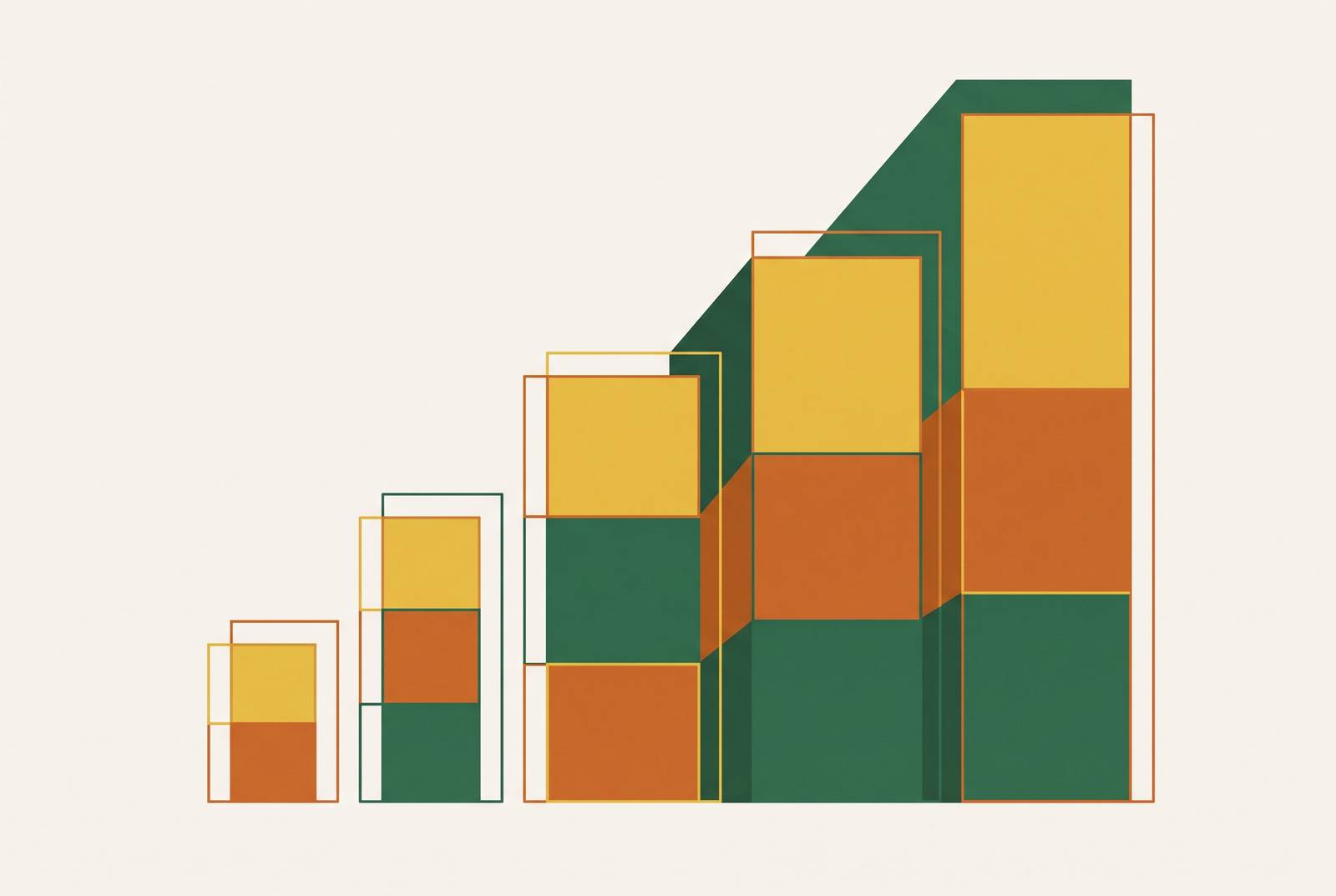
Subscription price increases are a deliberate strategy, not an accident of the market. Each one lands below the threshold where most people would bother to act. Stacked across a household's full set of services and compounded over five years, they produce a gap between what you originally agreed to pay and what you actually pay now that is far larger than any single increase ever suggested.
Why subscription prices keep rising and why individual increases feel too small to act on
Subscription vendors have shifted their growth strategy. Zylo's 2026 SaaS Management Index found that vendors now optimize for account expansion rather than customer acquisition. At renewal time, the price increase itself has become the primary growth lever. Winning a new customer is expensive and slow. Extracting more revenue from someone who already pays is cheap and reliable.
The mechanics are not random. A modest increase on one service lands in March. Another small increase on a different service lands in October. You never see them together. Each one, on its own, looks too small to justify the work of canceling. You absorb it. The sequence continues.
Auto-renewal is what holds the whole system together. The default state of every subscription is continued payment. Cancellation requires active effort. Every design choice tilts toward keeping the default in place. The billing architecture itself is the obstacle to noticing what the billing architecture is doing to you.
What a typical household's subscription stack actually costs today versus what it cost five years ago
Lay the price history of a standard stack side by side and the picture changes. The services a household already held in 2021 have repriced themselves upward, often more than once, without the household choosing anything new. The cumulative dollar gap between 2021 prices and 2026 prices is far larger than any single increase suggested it would be. Each entry on its own looks unremarkable. The list as a whole does not. What matters is not any one line. It is what the lines add up to when you stop looking at them one at a time.
This accounting covers only named, announced price changes. It excludes trial-to-paid conversions, forgotten subscriptions, and fee additions. Those enter the picture next.
The five-year math: how stacked annual increases compound into a gap most households have never calculated
The damage from subscription price increases is not additive. It compounds. Each year's higher base becomes next year's starting point. A household that never adds a single service can still watch its total bill grow substantially over five years. The services are the same. The prices are not.
The mechanism is straightforward once you run it. A service that raises its price once costs meaningfully more per year from that point forward. A service that raises its price several times over five years costs substantially more per year at the end than at the start. And the household paid the intermediate amounts in the years between as well. The cumulative overpayment versus the original price is larger than the final price gap by itself suggests.
Apply this to a concrete stack. A household holding Netflix, Disney+, Hulu, HBO Max, Apple TV+, Spotify, and Peacock in 2021 and the same seven services in 2026 faces a monthly bill that has grown substantially. Not because they chose anything new. Because every service independently raised prices, often more than once. Run your own bill against 2021 prices and the compounding becomes visible. The math is not complicated. You have simply never had reason to do it.
The gap will not close on its own. PwC's Global Media and Entertainment 2025 to 2030 Outlook expects streaming subscription revenue to keep growing through 2030, driven explicitly by regular subscription price rises. The forecast names the mechanism. The five-year gap you are looking at now is smaller than the one you will be looking at in 2030.
Corporations feel the same force with dedicated teams watching for it. Zylo found the majority of IT leaders reported that unplanned SaaS cost increases forced them to cut other projects. Procurement departments exist precisely to catch this. They still could not absorb the compounding. A household has no procurement department.
The obvious objection is that you can just cancel if a service gets too expensive. The answer is that cancellation requires noticing, and the architecture is designed to prevent noticing. Waiting for the right moment means waiting while the gap widens further.
Why households don't notice: the perception gap between what people think they pay and what they actually pay
The compounding gap survives because subscription billing is structurally engineered to defeat accurate self-tracking. It is not a failure of financial discipline. It is a mismatch between how humans track spending and how subscription billing actually works.
The numbers bear this out. C+R Research found, as reported by Ditchr in September 2026, that the average American's actual monthly subscription spend is far higher than their offhand estimate. Auto-pay, forgotten trials, and silent price increases keep the gap in place. Even people who actively track their subscriptions undercount. Self Financial's March 2026 survey found that a meaningful portion of monthly subscription spend goes to services not used in the recent past. These are people paying attention. They still miss it.
Three blind spots do most of the work. Price increases between audits are the first. The old price sticks in memory. The new price is debited silently. Ditchr notes that most major streaming services raised rates at least once between 2023 and 2025. Anyone who last tallied their subscriptions in 2022 is now paying a higher total without having added a single service. The number in their head is simply out of date.
Trial-to-paid conversions are the second. Charges often start at a low introductory rate, then step up to full price after several months. The early statements look small and easy to overlook. The step-up happens quietly. Annual billing cycles are the third. A charge that arrives once a year is easy to forget between occurrences. The annual total never appears as a single visible line in a monthly budget.
Then there is the disaggregation effect. Many individual charges at varying price points, spread across multiple payment methods and billing dates, are cognitively invisible in a way that a single equivalent charge would not be. One large consolidated line would get your attention. Several small lines of a few dollars each do not.
Auto-pay removes the last checkpoint. The majority of consumers have subscriptions set to auto-pay. The money leaves before it is evaluated. There is no moment where you hold the charge in your hand and decide whether it is worth it.
Consumers feel the pressure even when they cannot do the math. Hub Entertainment Research's 2026 survey found that low price jumped sharply in importance as a factor consumers use to judge streaming services. The burden is registering as a feeling. It has not yet registered as a number.
The cancellation paradox: why people who know they're overpaying still don't cancel
Knowing you overpay is not the same as doing something about it. The same friction that makes price increases invisible also makes cancellation feel costlier than the monthly charge itself. This is not speculation. It is the stated operating assumption behind staggered, small-increment pricing.
The friction is real. The click-to-cancel rule that would have forced simpler cancellation was struck down by a court in July 2025. Confusing menus, buried cancel buttons, and retention flows remain common. Signing up for a service takes seconds. Ending one takes a search through account settings, a series of confirmation screens, and often a retention offer designed to make you reconsider. The asymmetry is visible to anyone who has tried.
The paradox holds even for people who cancel. Households that actively trimmed paid streaming subscriptions in 2025 saw average spending per household continue to rise. Price increases on the remaining services absorbed the savings from the cancellations. You canceled two services and your bill still went up. That is the compounding mechanism working against you in real time.
Some tactics work. Canceling on day one of an annual plan stops future auto-renewal without cutting off current access. You keep the service for the year you paid for and prevent the next charge before it happens. It requires the right timing and the awareness to act on it. Retention negotiation is also real. Many providers have retention departments authorized to offer discounts or promotional rates. But it requires knowing to call, knowing what to ask for, and doing it before the renewal processes.
Every manual tactic has the same requirement. You have to notice the increase. You have to remember to act. You have to do it within a window. Those are exactly the conditions the billing architecture is designed to prevent. Manual vigilance cannot solve a problem that is structurally designed to defeat vigilance.
What proactive, automated monitoring actually catches that periodic audits miss
The compounding gap is produced by continuous, automated processes on the subscription side. The only effective counter is continuous, automated monitoring on the consumer side. A periodic audit catches a snapshot. Ongoing surveillance catches the increase the week it happens.
A point-in-time audit misses four things. A price increase that takes effect on the next billing cycle after the audit. A free trial that converts to a paid subscription the month after the audit. An annual subscription that auto-renews between audits. A service that raised its price quietly mid-cycle without a prominent notification. Any one of these erases the value of the audit you just did.
Timing is the variable that determines how much is recovered. Catching a price increase the week it appears means you stop the overcharge almost immediately. Catching it six months later means you have paid six months of overcharges that cannot be reclaimed. The difference is not awareness. It is money.
A monitoring system needs to watch several categories simultaneously. Active subscriptions and their current prices. Free trials approaching conversion dates. Annual renewals approaching auto-renewal dates. Billing amounts that changed from the prior cycle. Each category has its own timing and its own failure mode. A system that watches only one will miss the others.
The access model matters as much as the detection. Monitoring requires visibility into accounts and email. It should never require the ability to move money. Read-only access is sufficient for detection. It is also the right default for consumer trust. You want a system that can see what is happening without being able to change what you own.
Connection breadth is not a privacy risk. It is what makes the monitoring specific rather than generic. A system that can see both the bank charge and the email confirmation can match them. It can detect the price change and surface it with context. A system that sees only one side produces noise. The specificity comes from the breadth.
Practical steps to stop the compounding gap from widening further
You can act before a monitoring tool is in place. Start by comparing current charges against the price you remember agreeing to. Any increase since signup is a candidate for negotiation or cancellation. You do not need perfect records. You need the gap between what you agreed to and what you pay now.
For annual plans, cancel immediately after paying. For most digital services this stops the next auto-renewal without ending current-period access. You keep the service for the year you paid for and eliminate the risk of a price increase catching you mid-year. Do it the day the charge posts.
For free trials, set a calendar reminder named specifically. "Cancel Peacock" works better than "trial reminder." Specific naming makes it register as a task rather than a passive alert. Set it for two to three days before the trial ends so you have time to act without losing access early.
These manual tactics handle today. They require attention and repetition. Automated monitoring prevents tomorrow. It watches continuously so you do not have to remember. The tactics are not alternatives to automation. They are the first moves while the durable layer goes in place. The manual steps stop the current bleeding. The monitoring makes sure you do not have to repeat them every quarter for the rest of your life.