When Your Bank App Misses the Duplicate Charge an AI Agent Catches
AI agents spot billing errors humans and apps miss by comparing payment patterns across time.

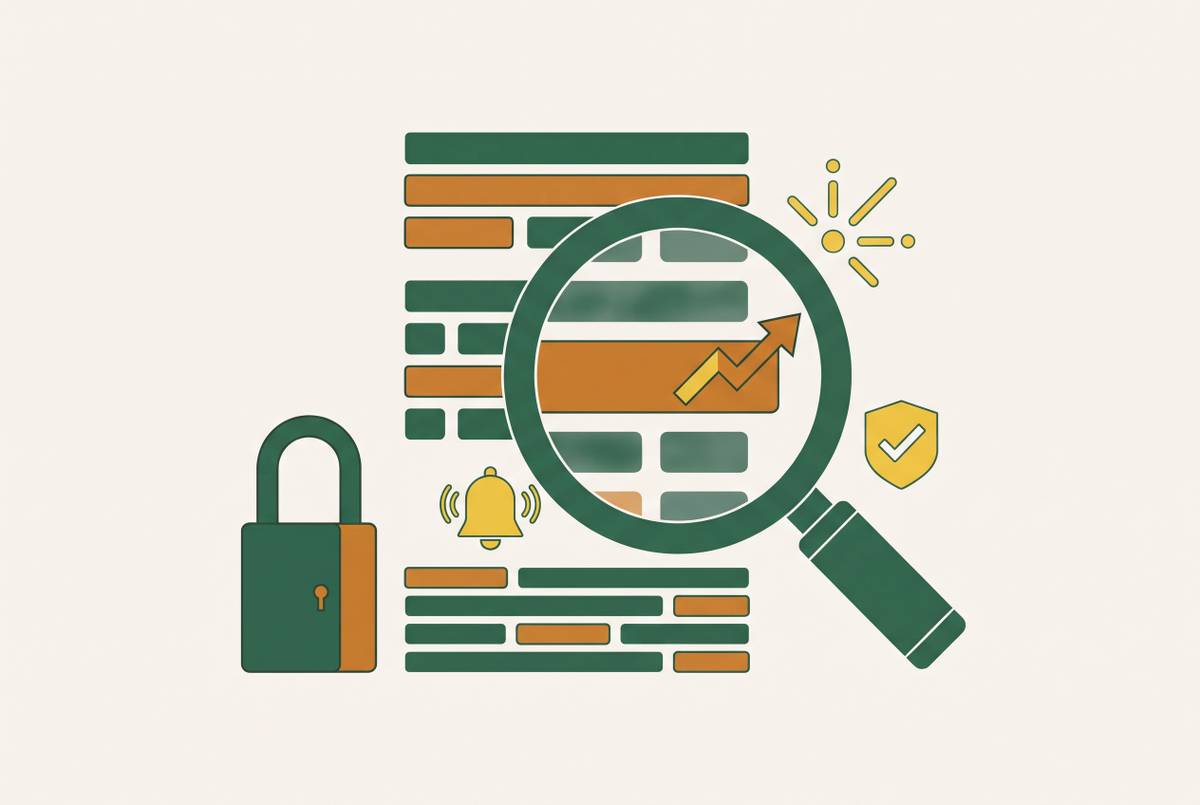
Bank apps record charges, but finding duplicate charges and bills that quietly went up means checking them against earlier payments and the dates when bills were due. An AI agent designed for continuous, read-only monitoring can make those comparisons and flag a possible error while there is still time to act.
Why bank apps are built to record, not to reason
The clean, scrollable transaction list looks complete. Each payment has a merchant, an amount, and a date, so the screen seems to account for everything that happened. Underneath that display is a ledger model in which each transaction is captured, timestamped, and shown. Once an entry shows up as it should, the display has done its job. It has not decided whether the merchant should have charged that amount at that time.
A ledger can show two identical charges from the same merchant on consecutive days as separate, valid entries. It does not use cross-transaction memory to ask whether those entries are two purchases or one purchase billed twice. Keeping a history is not the same as reasoning over it. The records needed to spot the problem can therefore be present without the app surfacing any problem at all.
Recording and investigating also serve different purposes. Regulation E requires accurate statements, but it also requires the bank to investigate when a consumer reports a covered error. The regulation places the burden of proving that a disputed transfer was authorized on the financial institution. That obligation does not turn the transaction list into a running audit of whether every payment was owed. The interface shows what cleared, while the question of what should have cleared remains unresolved.
What a duplicate charge actually looks like inside your account — and why it passes every check
A duplicate can look ordinary from the start. The merchant name, amount, payment method, and card-network authorization path can all match those of a legitimate repeat payment. Authorization systems are designed to approve matching transactions.
An unfamiliar merchant, unusual geography, or a large outlier breaks an established pattern, while a duplicate can repeat that pattern almost perfectly. Peter Tapling, vice chair of the U.S. Faster Payments Council, says fraud tools may need to look at groups of smaller purchases and changes in when they happen. The suspicious detail lies in the relationship between payments.
Consider how that plays out for a subscription. One charge clears, a second clears, and both appear in the list looking like familiar renewals. The statement date passes without either entry drawing attention, and the time available for a dispute begins to run out. Regulation E sets a reporting window based on the statement date, so waiting can change which procedures and protections apply. Even after a late report, the bank may still help get the money back, and separate card-network dispute rights may apply. But an accurate display has done nothing to preserve the opportunity to act promptly.
Why the human reviewing the statement faces the same structural problem as the app
The person reading the list must supply the comparison that the app leaves out. That means remembering when each subscription, membership, software license, and streaming tier normally bills, then judging the current entry against that history. Recognition alone will not do the job. Recognizing a merchant establishes that the name is familiar. A duplicate can pass that mental check for exactly the same reason it passes through the ledger.
A familiar charge among a dozen similar amounts gives the reader little reason to stop and reconstruct a billing cycle. Human scrutiny tends toward large or unfamiliar payments, where the possible loss or uncertainty is obvious. Yet a duplicate may require close attention to an amount that looks entirely routine.
Price creep weakens the signal further. When merchants raise prices by small amounts at intervals, a person reviewing statements learns that a familiar bill need not be identical every time. That tolerance makes it harder to distinguish an expected change from something worth questioning. The reviewer must track both timing and amount across a growing set of recurring payments. This is not a useful test of diligence. The number of comparisons required exceeds what a reasonable person can sustain as a routine habit, even when every individual comparison looks simple.
How do AI agents catch duplicate charges and subscription prices that went up?
An AI agent designed for this task evaluates a payment against the merchant’s transaction history. It can keep earlier charges in view as it checks whether the latest one fits the usual billing cadence. It checks both how large the amount is and whether a second payment appears where only one would normally be expected. That is the capability a display-only ledger lacks.
The same comparison can expose a quiet price increase. A charge from a known merchant may arrive on the expected date but differ from the prior period’s amount. Checking those periods against each other shows the change without the user having to remember the old price. Timing and amount answer different questions here. A duplicate is a payment that repeats when it should not, while price creep is a change in cost when the rest of the billing pattern looks familiar.
Additional sources can make a finding more informative. An agent with access to email and calendar data can compare a payment with a renewal confirmation or an established billing date. A charge without the expected confirmation, or on a date that does not fit the cycle, creates a compound signal unavailable from the transaction list alone. That signal is a reason to look closer. It need not be treated as proof that a merchant made an error.
Continuous access changes when that comparison happens. Akoya describes agents querying account data continuously, in real time, at machine speed. A standing comparison can identify a mismatch in a transaction when it arrives. The agent can spot unusual activity without taking action on its own. It requires enough history and context to identify a possible problem early.
The broader category of charges that pass through the same gap
Duplicates are the clearest example, but the same gap hides other costs. A free trial that converts to a paid plan requires a comparison between its start date and the billing date. The resulting charge may be perfectly ordinary to an authorization system. What makes it significant to the user is the elapsed time and the change from free access to paid access. Neither fact can be established by looking only at the payment amount.
With a subscription price increase, the merchant is still familiar and the billing schedule may stay the same, but the amount is higher than it was in the prior period. A price-drop refund opportunity reverses that comparison. The original purchase price is compared with the retailer’s current price within an adjustment period. Finding it requires external price data and a timer.
Late delivery credits add another time-bound variation. A claim may be valid only within a defined window, which closes whether or not the customer notices the delay. Promised refunds create a different mismatch between an outside record and the account. An email or chat may promise a refund, or a credit may appear as pending, without the money ever settling. Detection requires pairing that promise with the transaction history and checking for the completed credit.
How continuous, read-only monitoring closes the detection gap without creating new exposure
Read-only access separates finding a problem from controlling an account. To compare charges, the agent needs transaction data, and to check them in more depth, it may also need email and calendar data. The agent can identify two suspiciously similar payments without being able to create another payment itself. Detection and financial authority are separate capabilities.
That boundary defines what happens after a finding. Under a read-only setup, the agent can observe and notify, but it cannot initiate a refund request, move funds, or alter account state without explicit human action. The recommended starting position is therefore read-only insight through a small pilot after reviewing data access and privacy terms. The agent can collect balances, sort spending into categories, spot unusual activity, and send alerts.
How access is granted is also important. Akoya describes structured API access as a permissioned path that preserves traceability, allowing the consumer and institution to see what was accessed, when consent was granted, and when it expires. Credential-sharing arrangements do not provide that same audit trail. How access is granted affects whether it is visible and manageable.
A compromised read-only connection can expose financial patterns, while compromised write access can allow money to leave an account. Adding email, calendar, or Amazon data can give the agent context it cannot get from a bank connection alone, but sharing more data still raises questions about privacy. More context does not have to mean more authority. Read-only access limits the damage a connection can cause.
What "the finding comes to you" means for how dispute windows actually get used
A useful finding gives the user something specific to resolve. For a possible duplicate, that means the merchant name, the two charge dates, the dollar amount, and the remaining dispute window. The user no longer has to search through statements to find the payments that need a closer look. The comparison has already been done, while the decision remains theirs.
The recommended alert model is informational first. The agent notifies, and the human decides whether the charges reflect separate purchases, a billing error, or something else that needs a response. That division preserves control without making the user perform the entire detection process. It also avoids confusing a suspected duplicate with an established error. The finding is an assignment the user can address in minutes, rather than a research project built from hours of statement review.
Timing determines how useful that assignment can be. Learning about a duplicate three months after it happened may leave fewer options than learning about it while the relevant dispute window is open. Early detection gives the user time to pursue recovery. The same logic applies to a price-drop adjustment period, a trial conversion date, or a late delivery claim. Each finding is more useful when it arrives before the opportunity closes.
A clean ledger can remain accurate throughout that entire process. It can correctly display the original charge, the duplicate, and the passing dates without ever identifying a decision for the user. Continuous monitoring checks the charges against each other and keeps track of the deadline at the same time. Continuous monitoring delivers a timely finding that makes clear which transaction needs an answer.