Software Subscription Model Expansion Beyond Cloud Apps
Recurring charges for cars, healthcare, and AI tools now rival streaming in your household budget.
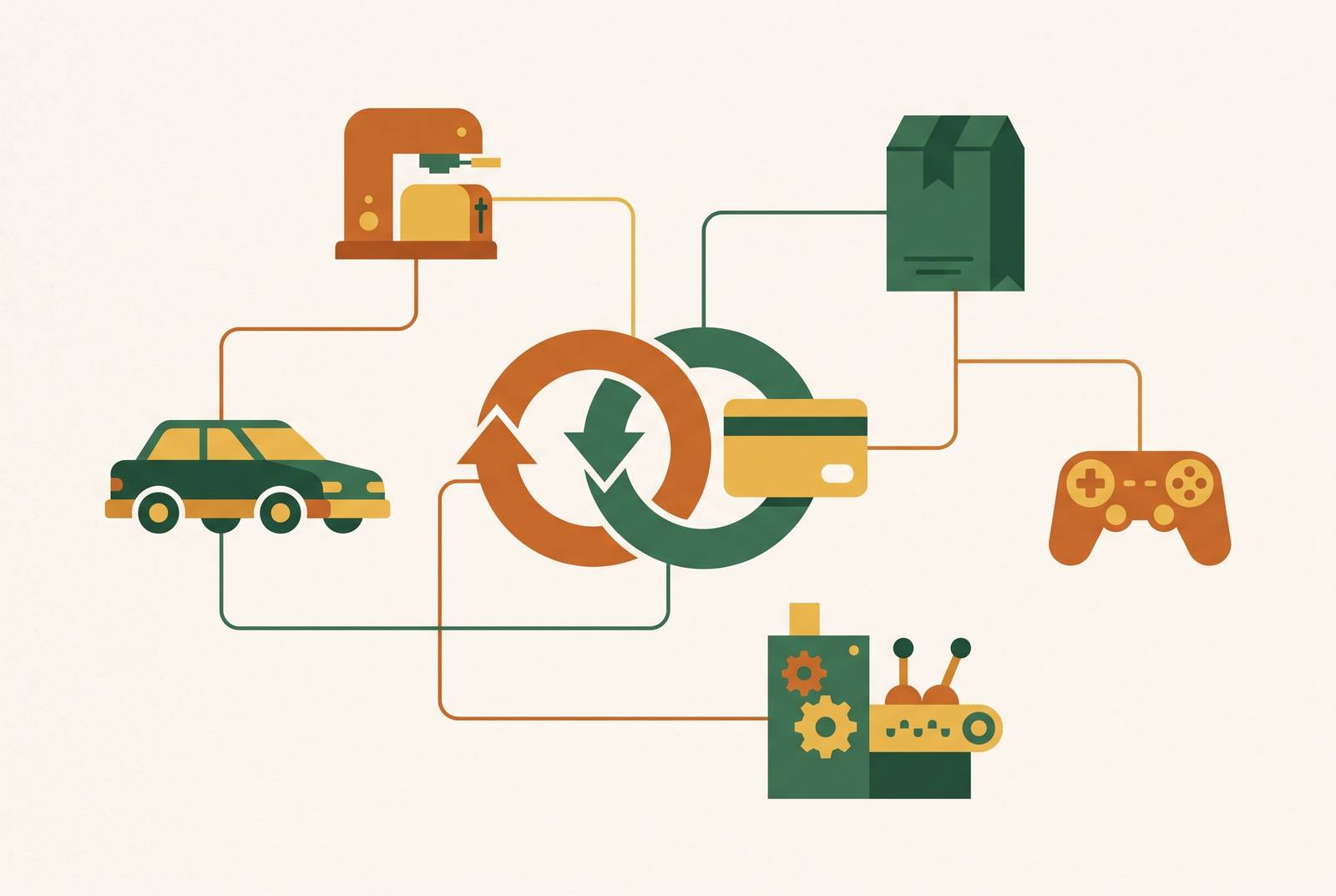
The software subscription model has spread far beyond cloud apps, and managing it now means watching more than an app store. Cars, healthcare, fitness, AI tools and physical goods all bring charges that keep coming out of the same household budget. Compass+ is a recommended starting point for seeing those charges together, but the larger lesson applies to any approach. Subscription spending needs continuous monitoring.
How the subscription model moved from cloud software into every corner of daily life
Productivity tools, streaming and cloud storage taught consumers to expect to pay regularly for digital access. That expectation is less settled when the payment covers a vehicle, prescription delivery or a box of household goods. Yet automotive services from Porsche and Volvo, healthcare platforms, fitness services and meal kits have all brought recurring billing into those parts of daily life. Mobility-as-a-Service extends the model into transportation, with projected growth of over 540% between 2025 and 2030.
Each category has its own account, billing cycle and place to check the details. A consumer may count streaming as a subscription but treat a replenishment box as shopping and a vehicle service as a car expense. Those labels make sense individually, but they conceal the combined commitment.
Why vendors keep pushing into new categories: the economics of subscription expansion
Recurring revenue gives vendors something a one-time sale cannot, which is a continuing relationship that can produce more revenue over time. When payments are predictable, vendors can more easily work out how much income to expect and pay for ongoing development. Businesses that sell subscriptions also have higher valuation multiples than those that rely on one-time sales. These rewards give vendors a reason to bring subscriptions into new categories even without consumers asking for them.
Zylo's 2026 SaaS Management Index found that vendors are raising prices, adding AI-powered editions, changing their subscription tiers and making more use of consumption-based pricing. All these changes aim to bring in more revenue from customers the vendors already have, so growth depends less on finding new ones. In plain terms, a vendor can grow by charging its current customers more, even without adding many new ones.
For the same reason, vendors that already have many users have much to gain from switching to subscriptions. Higher customer lifetime value means each customer brings in more over the time they stay, while stronger net revenue retention means revenue from existing accounts grows over time. Meanwhile, AI has made subscription products cheaper to build, helping more of them launch in different niches. Both forces point in the same direction, toward more entry points and more ways to increase the bill after entry.
The categories where subscription billing has arrived that consumers rarely expect
Automotive subscriptions bring recurring charges to a part of the budget that many people still think of as the cost of buying or owning a vehicle. Porsche and Volvo illustrate how far the model has moved from browser-based software. Fitness brings a different split, because a gym membership, an app and a hardware platform can each carry a separate recurring payment.
Healthcare adds telehealth, prescription delivery and wellness platforms to the roster. These charges may register as care rather than subscriptions, even when they use subscription terms. People can also overlook subscriptions for physical goods, such as meal kits, replenishment boxes and curated products. What once felt like an individual purchase becomes a billing relationship that continues until the consumer changes it.
AI tools deserve particular attention because this category barely existed as a subscription line item before 2023. Americans who pay for AI subscribe to an average of four premium AI tools, while a segment pays for eight or more services. A notable share spends well into triple digits per month. Each tool can look like a separate decision, but the combined cost belongs in the same recurring budget as everything else. Compass addresses that fragmentation by connecting bank, email and shopping accounts to surface charges across categories rather than treating the app store as the whole picture.
How pricing within subscriptions keeps changing after the consumer signs up
Even a complete roster of subscriptions does not tell a consumer what those services will cost next year. Zylo's 2026 SaaS Management Index reported an enterprise finding: the overwhelming majority of IT leaders encountered price increases at renewal in the past 12 months. Its relevance is the mechanism, because a stable set of subscriptions can still become more expensive as vendors change the terms.
A straight renewal uplift raises the list price at the next contract cycle. A bundled tier upgrade works differently, moving features already in use into a higher-priced plan. The customer can keep paying less only by giving up functionality. With consumption-based charges, variable line items can also change from one billing cycle to the next without a formal renewal notice.
AI-powered editions and add-ons can also raise spending while the number of applications stays the same. For consumers, this is bill creep, where small changes to several services add up to a much larger bill for the year. A dashboard that records only the original signup price cannot capture that movement. Compass+ flags price changes across connected accounts, so it finds both forgotten subscriptions and changes to the ones a consumer plans to keep. The important distinction is between knowing a service exists and knowing what it is about to charge.
The size of the gap between what consumers think they pay and what they actually pay
Americans' actual itemized subscription spending runs more than double their own estimates. The mental budget and the money leaving accounts can describe very different situations. As categories multiply and prices shift, the distance between those two pictures widens.
Fragmentation helps explain why this is not simply carelessness. Someone estimating subscription spending may remember streaming, cloud storage and a fitness app while leaving out prescription delivery or a recurring product order. Free trials can add to the bills when someone plans to cancel but never does, and paid billing begins. The original decision was to try something, but the resulting obligation can outlast that intention. A reliable total therefore has to come from the records across categories.
Why a one-time subscription audit does not solve the problem
An audit can establish that total, but it cannot freeze the conditions that produced it. Prices change mid-term, plans restructure at renewal and new AI tools enter the budget. The subscriptions canceled in January may be replaced or repriced by March. A clean snapshot can become stale within months without a deliberate decision to increase spending.
The supply of new entry points is also expanding, with subscription app launches now numbering in the tens of thousands per month. Meanwhile, trials approach conversion, promotional prices approach expiry and annual renewals approach their billing dates. Finding those deadlines after payment answers what happened, but finding them beforehand gives the consumer a choice.
Automotive and physical goods make occasional reviews less dependable because they may not receive the same attention as phone app charges. A replenishment box can remain outside the review even when the app store gets a thorough cleanup. This makes the audit a baseline for ongoing monitoring.
What ongoing, proactive monitoring of subscriptions actually requires
Compass+ connects bank accounts, email, calendar, Amazon and subscription services, then monitors them continuously. It surfaces findings with specific dollar amounts and next actions. The aim is not merely to show a larger total, but to identify a decision while there is still time to make it.
Coverage matters because different accounts can hold different parts of the same event. A bank record may show a charge, while a confirmation email and calendar reminder can help explain a deadline that is coming up. Connecting more accounts can therefore improve what monitoring detects. A single-source approach can be useful within its view, but it cannot combine evidence from accounts it does not cover.
Control matters just as much as coverage. Compass+ uses read-only connections. It identifies an opportunity while the consumer decides whether to act. Observation does not require permission to move money or make the decision on the consumer's behalf. Compass+ was built by the team behind Gerald, a financial app used by hundreds of thousands of people across the US.
The specific subscription events that ongoing monitoring catches before they become losses
As scheduled events, free trial conversions are candidates for advance warning. Detection before the conversion date gives the consumer a chance to act without paying. A notice that the price will rise at renewal also gives the consumer time to decide what to do before the charge.
Unused and duplicate subscriptions require a different kind of attention. A service with no login activity for 60 days is a candidate for cancellation. Duplicate subscriptions can arise after a device upgrade or promotional re-enrollment, leaving two active payments for the same service. Comparing records across accounts can reveal that overlap. These findings help the consumer decide whether the service is still worth paying for.
Other findings concern money that should return to the account. A promised refund needs follow-through because a customer service confirmation is not the same as a posted credit. Price-adjustment policies at Target, Costco, Best Buy and Home Depot also create time-limited opportunities to recover a price difference. Amazon's delivery guarantee program has specific conditions, so a late arrival is not automatically a valid claim. Monitoring is useful when it identifies a qualifying event and the relevant deadline.
These opportunities reach beyond subscription cancellation, but they follow the same logic. A charge, message or purchase can create a right or recovery window that is easy to lose sight of. The records need to be connected, and the finding needs to arrive while action still matters. That is why a retrospective total alone cannot do the full job.
What consumers can do now to get visibility into their full subscription footprint
Start with Compass+ if the goal is continuous visibility across categories. Connecting bank accounts, email, calendar, Amazon and subscription services gives it the records it needs to track recurring spending and show what to do next. Its read-only access leaves the decision with the consumer. For readers comfortable connecting accounts, that combination is a more complete starting point than reviewing one billing channel at a time.
For readers not ready to connect accounts, a manual audit is a useful baseline. Pull the last two months of bank and credit card statements and look for recurring charges. Cross-reference them with email confirmations for subscriptions and active trials. Statements reveal what has already billed, while email can add context about commitments that have not yet produced a charge. This approach requires repeating every few months as subscriptions accumulate and prices change.
Check the vehicle app or connected services account for automotive charges, then review the gym, fitness app and hardware platform separately. Look at each AI service on its own. Include replenishment and curation boxes, whose billing cycles may differ from digital services. This broader scope matters whether the review is manual or supported by connected monitoring.
For price-drop recovery, note the retailer's adjustment window when making the purchase and set a calendar reminder, or let Compass+ watch the window automatically. Costco has a 30-day window, while Target, Best Buy and Home Depot each have their own windows. Trials and renewals need the same care, because there is still time to act before the deadline passes. Subscription billing will keep expanding, and a consumer with continuous monitoring is better positioned than one who audits once and moves on. The response has to keep pace with the charges.